Startups3 min readBy Fuorix
How Much Does an MVP Cost in 2026? Fixed-Price Examples from Real Builds
An MVP should cost a fraction of the full product, but only if it is scoped like one. Real price bands from marketplaces, SaaS tools and internal apps we have shipped, and the 12-week process behind them.
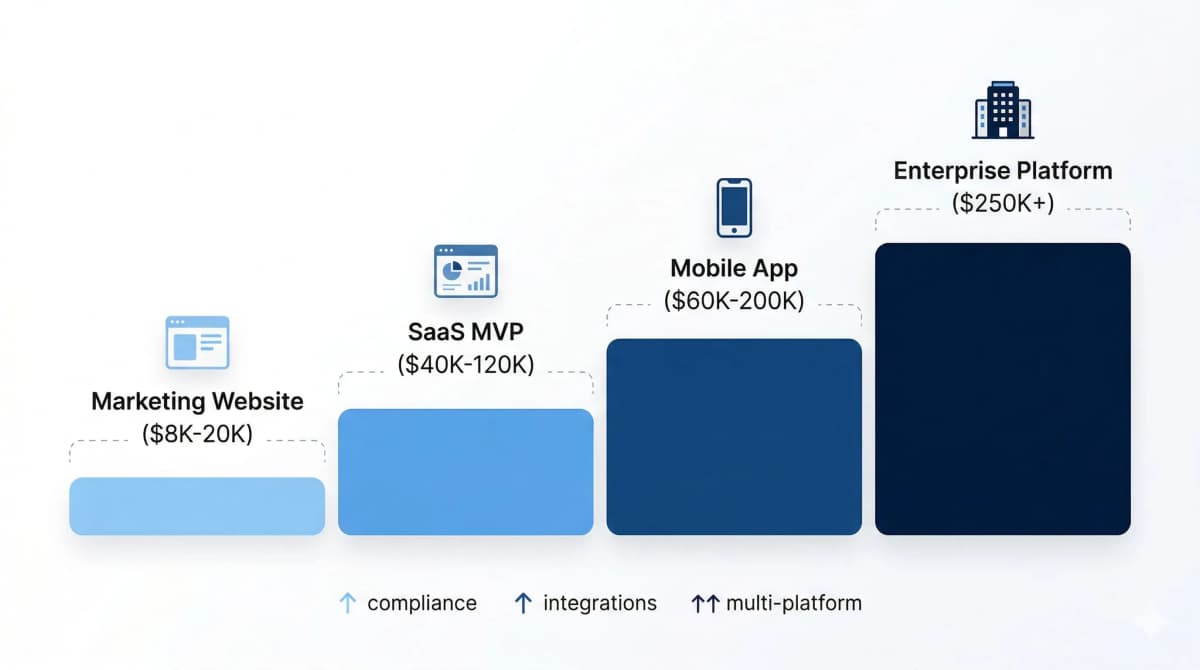
Here are the price bands we actually quote for MVPs, before the process detail below.
| MVP type | Typical fixed price | Timeline | Example |
|---|---|---|---|
| Internal business tool (replace a spreadsheet, one workflow) | $800 to $2,500 | 3 to 5 weeks | Inventory or quoting tool for a trading company |
| Customer-facing web app with logins and payments | $2,500 to $6,000 | 6 to 10 weeks | Booking platform, client portal, subscription tool |
| Two-sided marketplace (web) | $6,000 to $15,000 | 10 to 16 weeks | Buy Sell Liberia, a national classifieds marketplace |
| Mobile app plus backend | $5,000 to $12,000 | 10 to 14 weeks | Ordering or loyalty app with an admin panel |
Three things keep an MVP in these bands: one core user journey, off-the-shelf services for payments and email, and a fixed scope agreed in writing before the deposit. Add a second user type or a second platform and the price roughly doubles.
Every quote we give is fixed. If you have a one-page description of the idea, book a call and you will have a scope and price within 48 hours. Now, the 12-week process.
What an MVP actually is (and isn't)
An MVP is not a half-built product. It's the smallest version that delivers complete value to a specific user for a specific use case. Your MVP should answer one question: 'Will real users pay for this specific solution to this specific problem?' Everything else comes after validation.
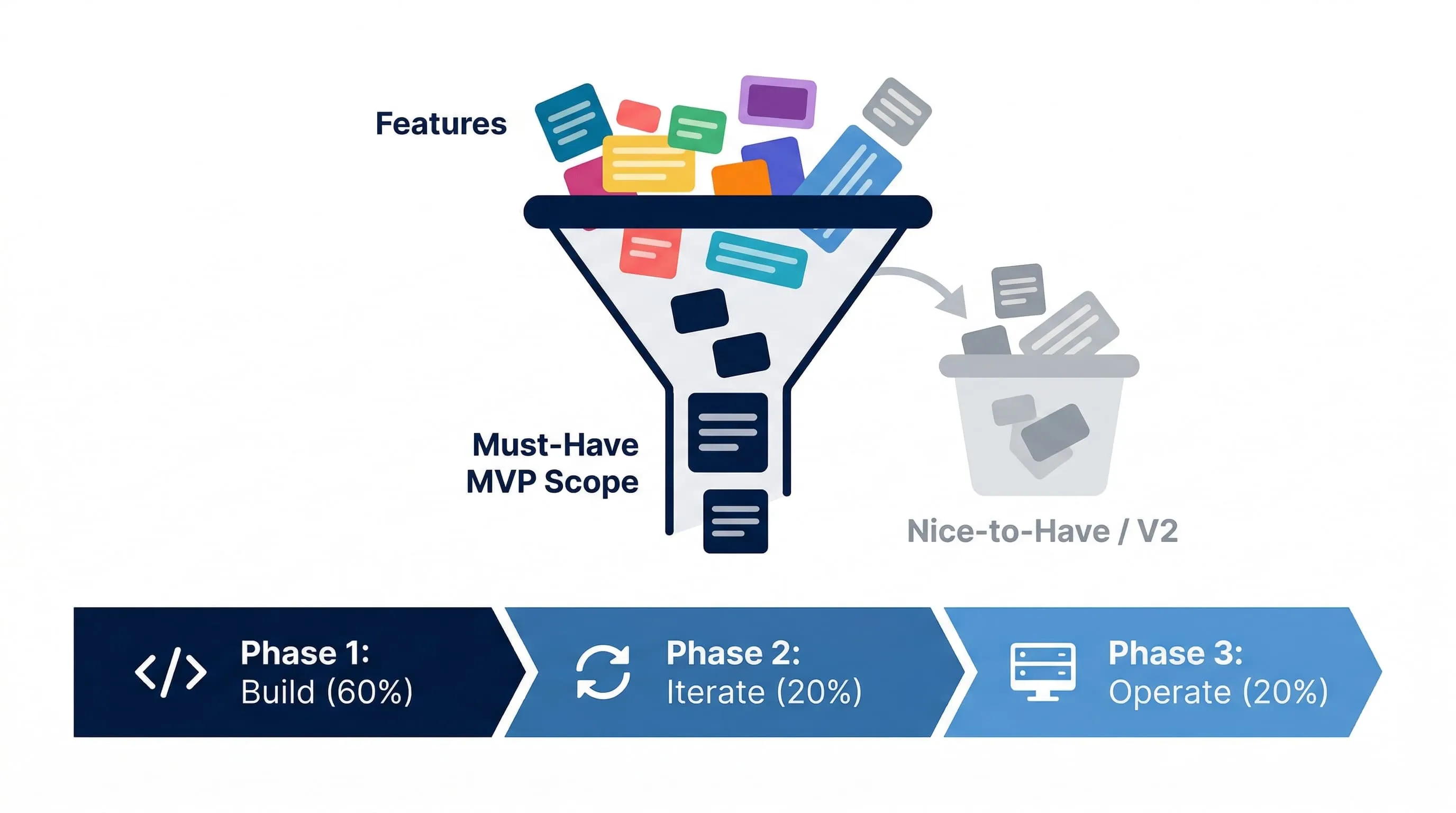 An MVP tests one hypothesis — not every feature you can imagine
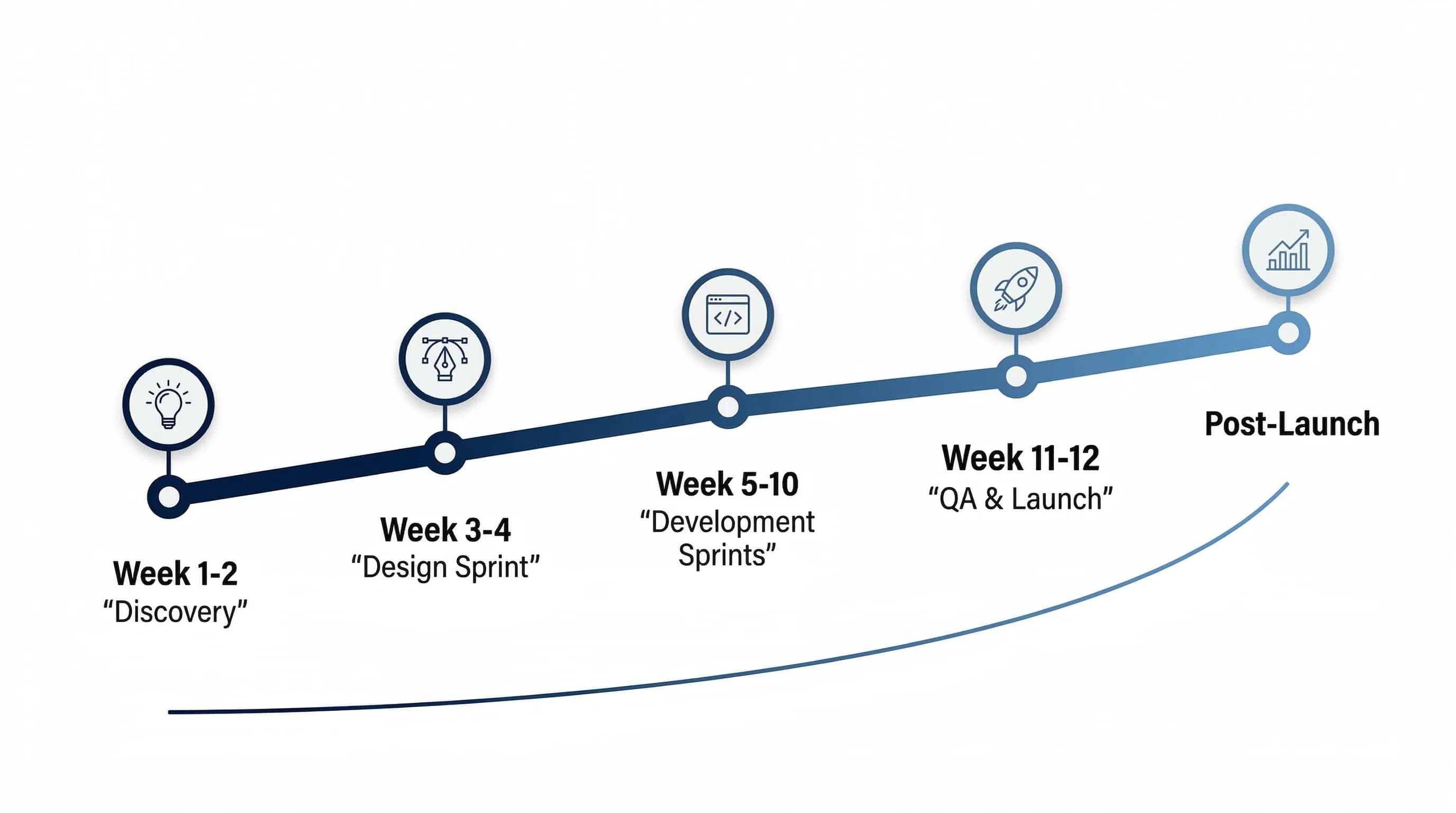
Week 1-2: Discovery and scope definition
We run a structured workshop covering: who is the primary user, what ONE job they hire this product to do, what existing alternatives exist, what single metric proves product-market fit, and the minimum feature set needed. Output: prioritized scope document, user flows, and tech recommendation. This phase costs $0 at Fuorix for qualified projects.
Week 3-4: Design sprint and prototype
We design the core user flow — not the entire product. We build a clickable Figma prototype that looks like the real product, then test it with 5-8 target users. At $0 in code cost, changing a screen in Figma takes 30 minutes — in production code it takes 8-16 hours.
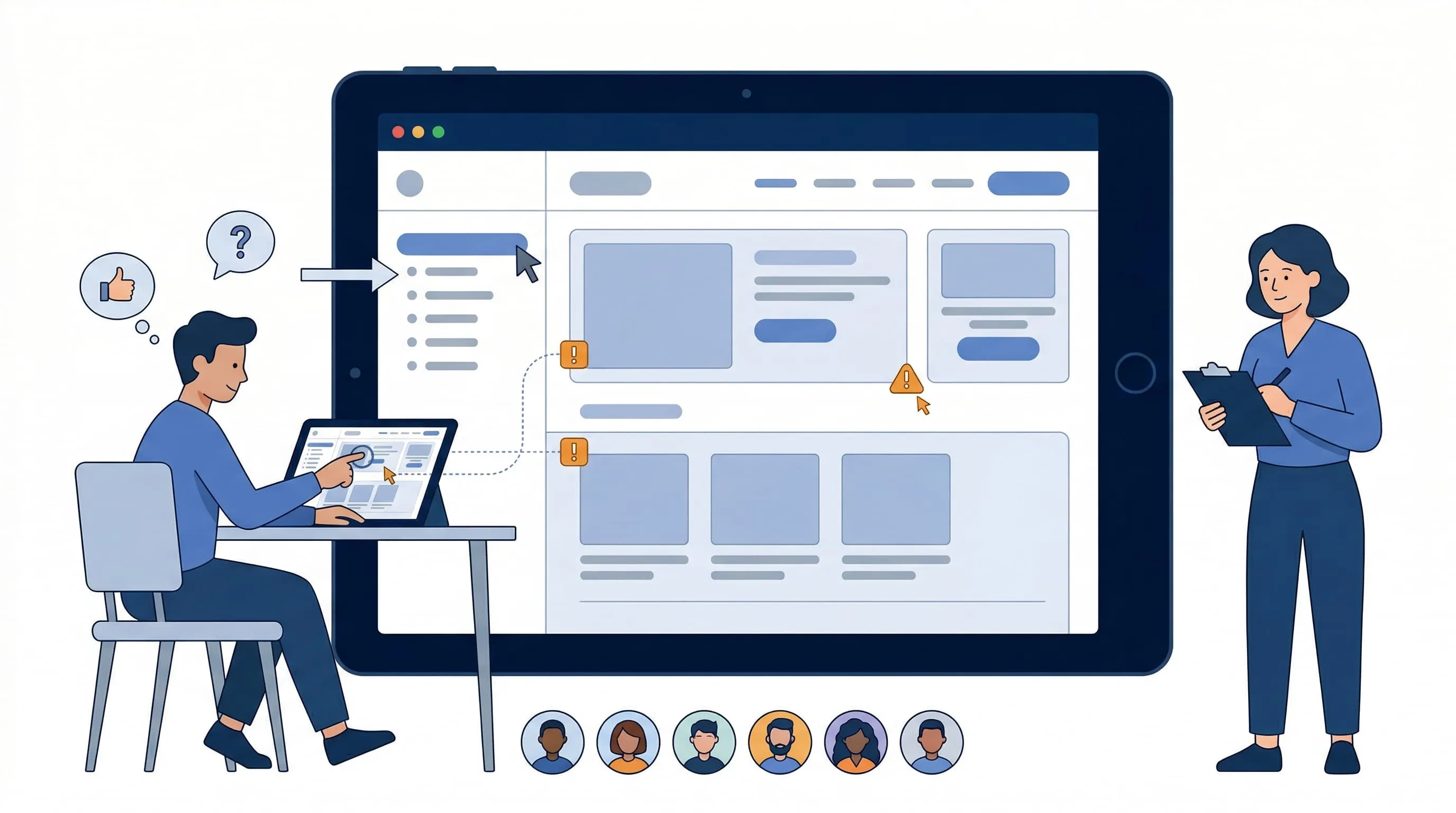 Testing prototypes with real users catches UX problems before development begins
Week 5-10: Agile development sprints
Six weeks of focused development in 1-week sprints. Each sprint produces a deployable increment on staging. Typical stack: Next.js frontend, Node.js backend, PostgreSQL database, Stripe for payments, and Vercel or AWS for hosting. We write automated tests and deploy to staging after every merged PR.
Week 11-12: QA, launch, and monitoring
Cross-browser testing, mobile responsive testing, load testing, security audit (OWASP top 10), and SEO verification. We set up error monitoring (Sentry), uptime monitoring, and analytics. Launch day is a non-event — the product has been running on staging for weeks.
After launch: the real work begins
The first 30 days reveal more than 6 months of planning. Watch which features users actually use, where they drop off, and what support questions repeat. Every MVP project at Fuorix includes 60 days of post-launch support and weekly analytics reviews. Ready to build your MVP? Contact us for a free scoping session.
Need help with this?
We build the systems described in this article. Let’s talk about your project.
Keep reading
Related articles
PricingFebruary 5, 2026
Custom Software Cost in 2026: Real Price Bands for UAE and UK Small Businesses
Forget the '$50,000 to $500,000' articles written for enterprises. Here are the fixed-price bands we quote small and mid-sized businesses in the UAE and UK, three worked examples, and the five things that move the price.
4 min read
Read article
BusinessFebruary 18, 2026
How to Hire a Software Development Company in the UAE Without Getting Burned
Most bad software projects in the UAE fail at the hiring stage, not the coding stage. The questions to ask, the contract terms that protect you, and the red flags that mean walk away.
2 min read
Read article