Web Development3 min readBy Fuorix
Why We Build UAE and UK Business Websites in Next.js (and When We Don't)
Most of the business websites we ship for UAE and UK clients are built in Next.js. Here is what that means for your speed, Google rankings and hosting bill, and the three cases where we recommend something else.
If you run a business in Dubai, Manchester or Lahore and you are getting quotes for a new website, you will hear two words a lot: WordPress and Next.js. Here is the short version of how we decide, then the technical detail below.
We build in Next.js when: you care about page speed and Google rankings, you want the site to become an app later (customer portal, booking, quotes), or you have been burned by plugin updates breaking a WordPress site.
We still recommend WordPress or a website builder when: you need to publish long-form content daily with a non-technical team, your budget is under $500, or you only need a five-page brochure site that will never change.
Our business websites start from $500 (about AED 1,800 or £400) and most launch in 3 to 4 weeks. See Website Design & Development for what is included, or book a free call and we will tell you honestly which option fits.
The shift from SPAs to server-first architecture
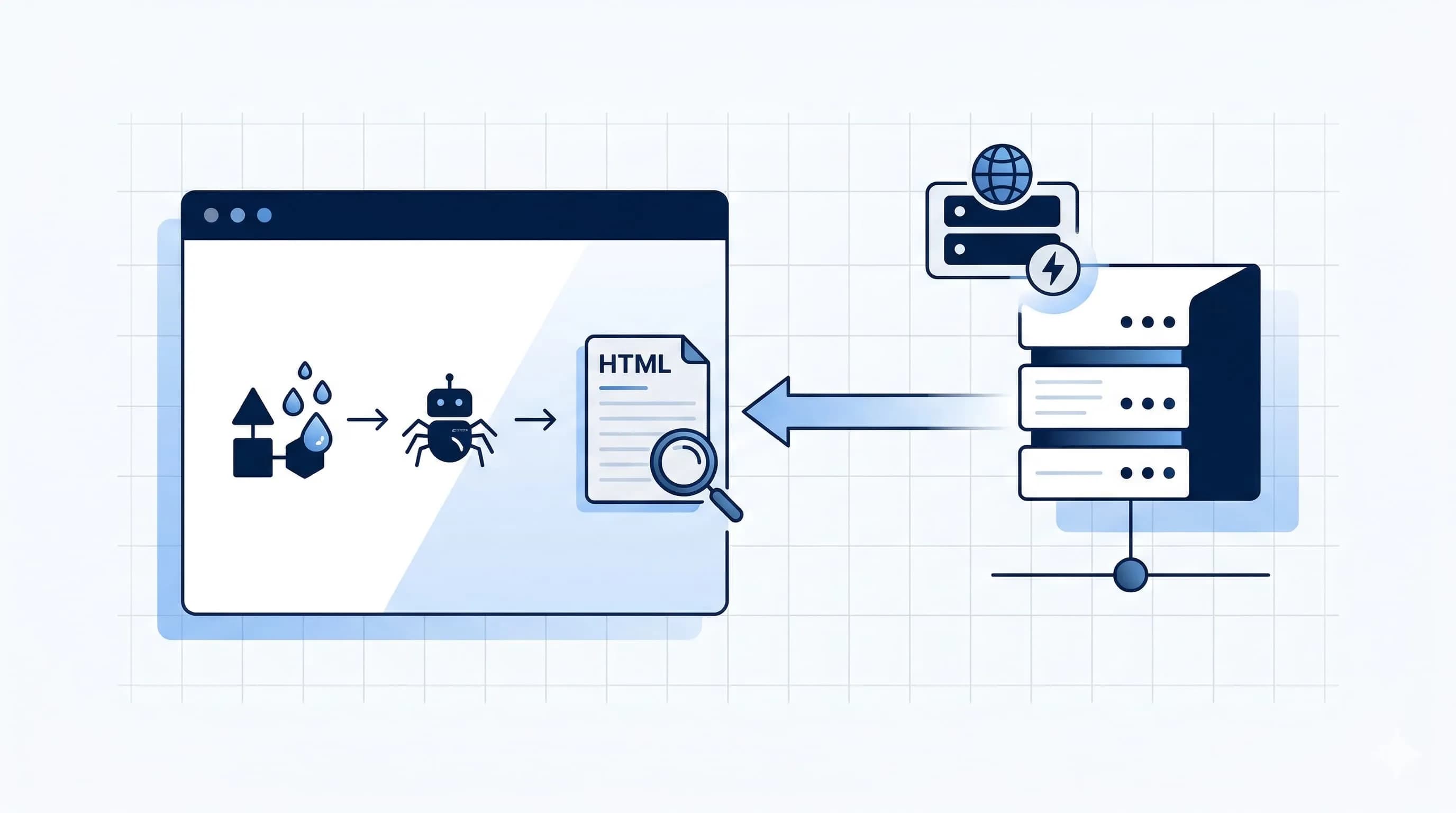
Single-page applications dominated the 2018-2022 era, but the industry has decisively shifted toward server-first architectures. Next.js leads this shift by rendering pages on the server by default, sending fully-formed HTML to the browser, and hydrating only the interactive parts. The result is faster Time to First Byte (TTFB), better SEO crawlability, and reduced JavaScript bundle sizes. For businesses, this translates directly into higher search rankings, lower bounce rates, and more conversions. Companies that migrated from Create React App to Next.js reported 30-50% improvements in organic traffic within the first quarter.
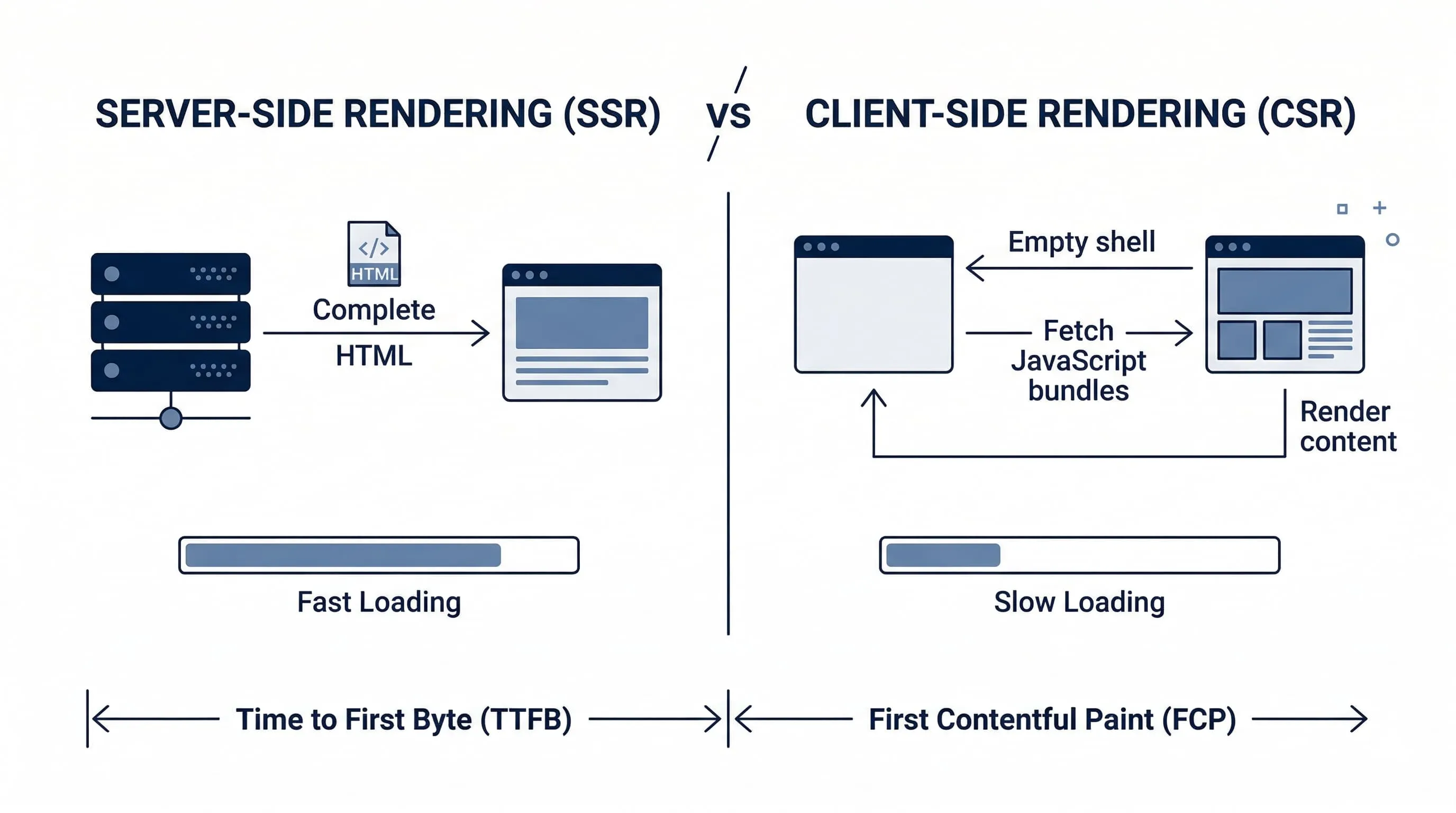 Server-first architecture delivers HTML before JavaScript even loads
Core Web Vitals and Google rankings
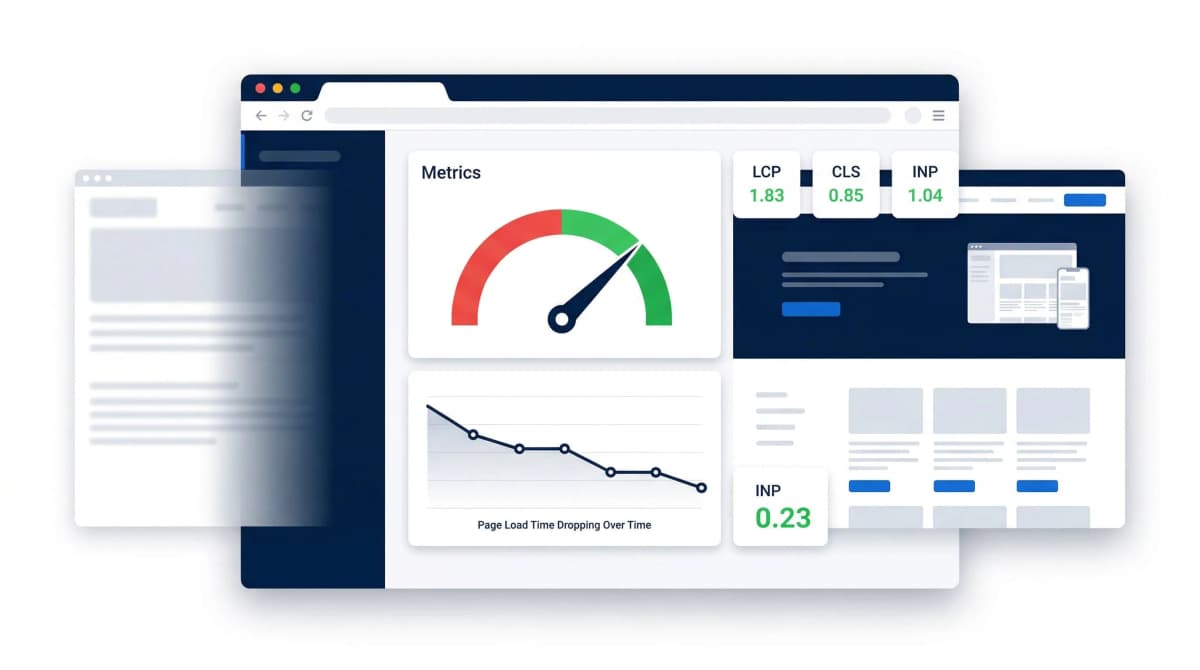
Google's Core Web Vitals — Largest Contentful Paint (LCP), Cumulative Layout Shift (CLS), and Interaction to Next Paint (INP) — are confirmed ranking factors. Next.js 15 addresses all three out of the box. Automatic image optimization via next/image handles LCP by serving responsive, WebP-compressed images with priority loading for above-the-fold content. Font optimization via next/font eliminates CLS caused by font-swap flashes. Built-in code splitting ensures INP stays under 200ms by shipping only the JavaScript needed for the current page. Our clients consistently score 95+ on Google Lighthouse after migrating to Next.js.
React Server Components change the economics
React Server Components (RSC), fully supported in Next.js 15's App Router, keep data-fetching logic, database queries, and API calls on the server. This means sensitive business logic never ships to the client bundle, reducing JavaScript by 40-60% for data-heavy pages. For a SaaS dashboard with 50 components, RSC typically cuts the initial JS payload from 800KB to under 300KB. Faster loads mean lower hosting costs, better mobile performance in emerging markets, and higher ad quality scores if you run paid campaigns.
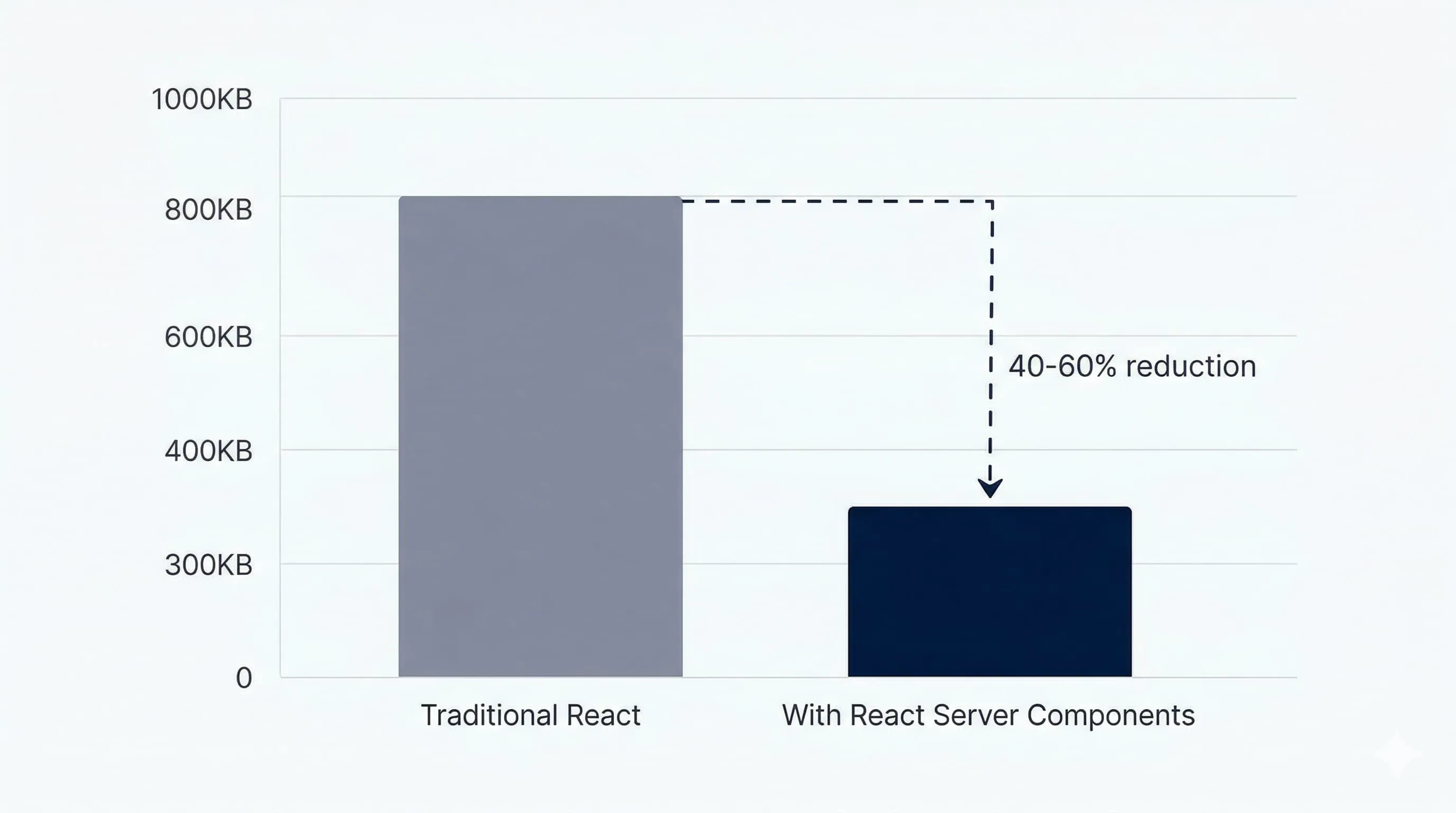 RSC reduces client-side JavaScript by 40-60% for data-heavy applications
Incremental Static Regeneration for dynamic content
ISR lets you statically generate pages at build time while revalidating them in the background when data changes. A product catalog with 10,000 SKUs renders instantly from the CDN edge while updating prices every 60 seconds. An editorial site publishes new articles that appear in under 10 seconds without a full rebuild. This hybrid approach gives you the speed of static sites with the freshness of server-rendered pages — something no other React framework handles as seamlessly.
The middleware and edge computing advantage
Next.js middleware runs at the CDN edge before a request reaches your server. This enables geographic redirects, A/B testing, bot detection, authentication checks, and feature flags — all executing in under 1ms at the edge location closest to your user. For international businesses, this means serving localized content without maintaining separate deployments. For SaaS products, it means instant auth checks without round-trips to an origin server. Edge computing reduces p99 latency by 60-80% compared to origin-only architectures.
When Next.js is the right choice for your business
Next.js is the optimal choice when your website needs to rank competitively on Google, Bing, and other search engines, load under 2 seconds on 4G mobile connections, and scale from launch-day traffic to millions of monthly visitors without re-platforming. Marketing sites, SaaS dashboards, e-commerce storefronts, content platforms, and internal tools — Next.js handles all of them with a single, unified framework. If you're evaluating frameworks for your next project, our web development team can help you assess whether Next.js fits your requirements — reach out for a free technical consultation.
Need help with this?
We build the systems described in this article. Let’s talk about your project.
Keep reading
Related articles
PerformanceMarch 15, 2026
Slow Website Costing You Leads? How We Fix Load Time for SMB Sites
Every extra second of load time costs you enquiries, especially on mobile in the UAE where most visitors arrive from Instagram and WhatsApp. Here is how we diagnose a slow site, what we fix first, and what it costs.
3 min read
Read article
StartupsJanuary 22, 2026
How Much Does an MVP Cost in 2026? Fixed-Price Examples from Real Builds
An MVP should cost a fraction of the full product, but only if it is scoped like one. Real price bands from marketplaces, SaaS tools and internal apps we have shipped, and the 12-week process behind them.
3 min read
Read article