Business3 min readBy Fuorix
How to Work With a Remote Development Agency From Dubai or London (Timezones, Contracts, Payments)
Most software for UAE and UK businesses is built remotely, and most of it goes fine. Here is what a well-run remote engagement looks like: the timezone plan, the weekly cadence, the contract terms and how payment should work.
If you are in Dubai or London and hiring a development team in Lahore, Cairo or Kyiv, the question is not whether remote works. It is whether the engagement is set up properly. Here is the setup we use with every client.
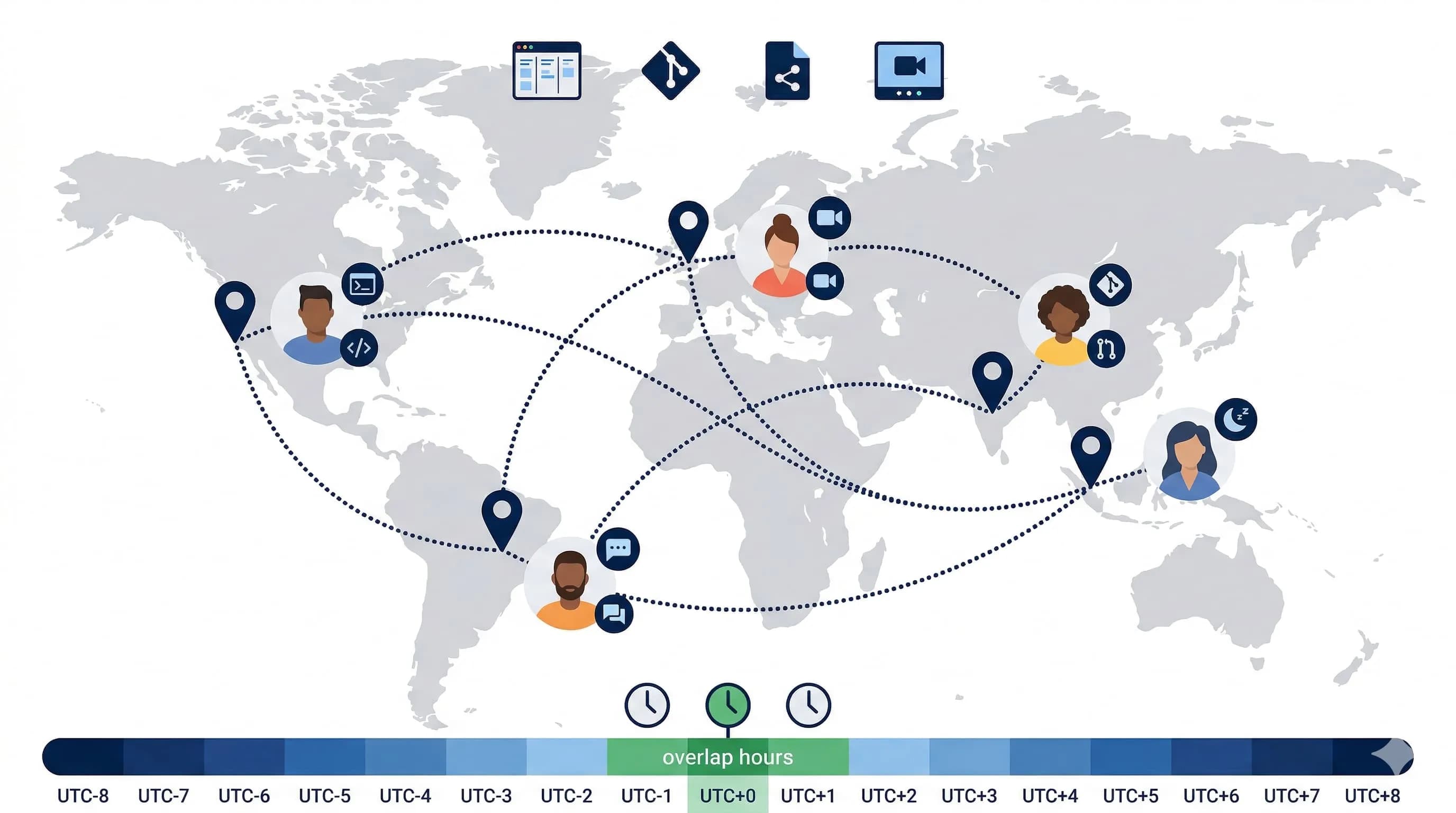
Timezone. We work Gulf Standard Time. Dubai clients have full overlap; London clients have overlap from 9am to 1pm UK time, which is enough for a daily check-in and a weekly demo.
Cadence. A written update every working day, a live demo every week, and a shared board you can open any time. If an agency cannot commit to that in writing, do not proceed.
Contract. Fixed price per milestone, IP assigned to you on payment of each milestone, source code in a repository you own, and a clear change-request process with prices.
Payment. Milestone-based, typically 30% to start, 40% at mid-project demo, 30% at launch. Bank transfer, Wise or card. Never 100% upfront.
The rest of this post is written from the team's side: how we run our own engineers remotely so that you get the responsiveness of an in-house team.
Remote teams outperform co-located teams — with the right systems
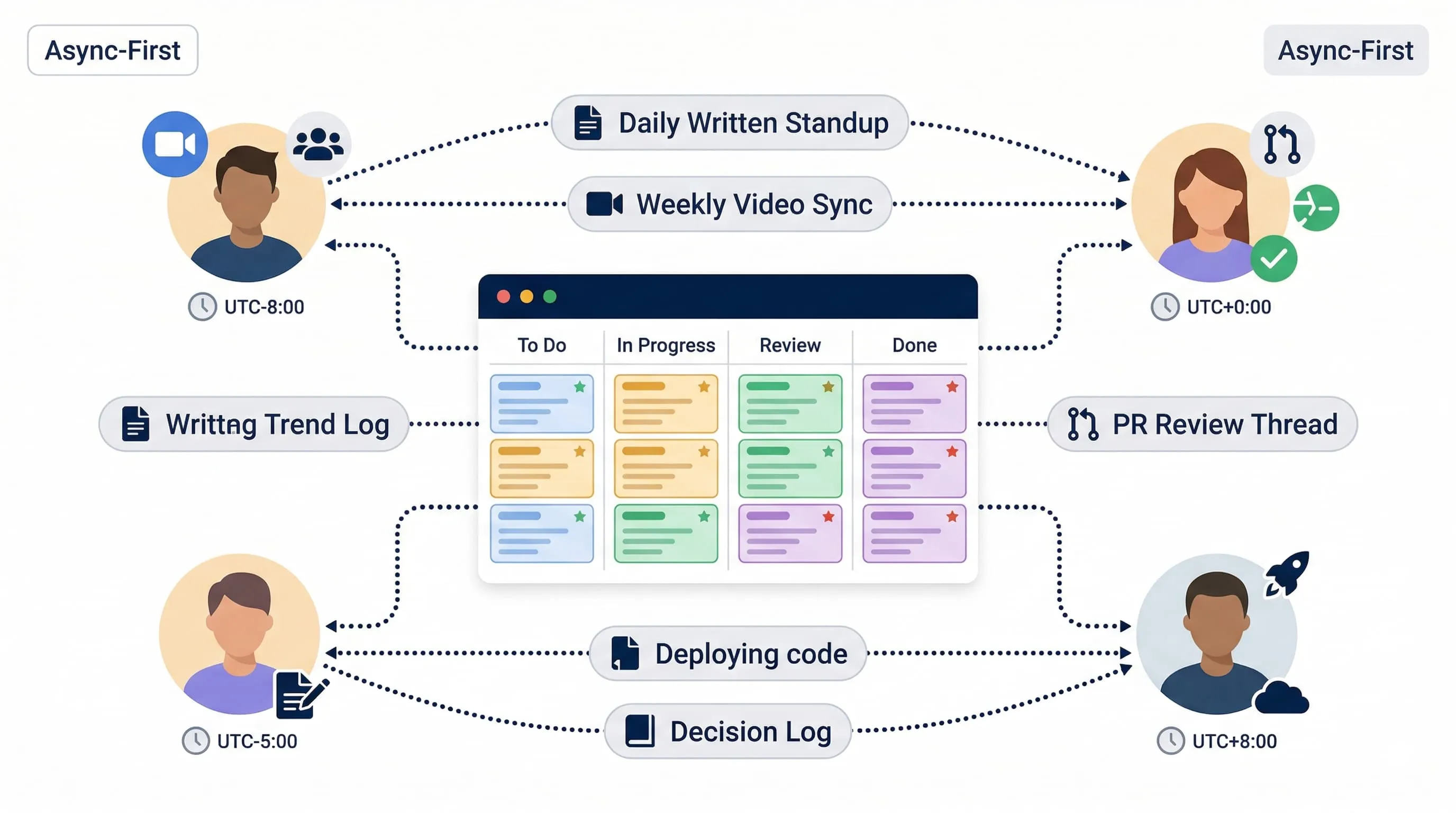
A 2025 Stanford study found that remote workers are 13% more productive than office workers, with lower attrition rates and higher job satisfaction. But this only holds when teams have explicit communication protocols, async-first workflows, and trust-based management. Without these systems, remote teams devolve into Slack chaos, meeting fatigue, and missed deadlines. Here's the framework we use at Fuorix to manage distributed engineering teams across 5 timezones.
 Remote teams outperform with the right systems — and underperform without them
Async-first communication saves 2+ hours per day
Default to async. Write Loom videos instead of scheduling meetings. Post PR descriptions that explain the 'why' not just the 'what.' Use Linear or GitHub Issues for task tracking with clear acceptance criteria. Reserve synchronous time for: sprint planning (1 hour biweekly), architecture decisions (ad-hoc, max 45 minutes), and pair programming on complex problems. Our engineers typically have 1-2 meetings per day maximum — the rest is focused building time.
Code review culture that teaches, not gatekeeps
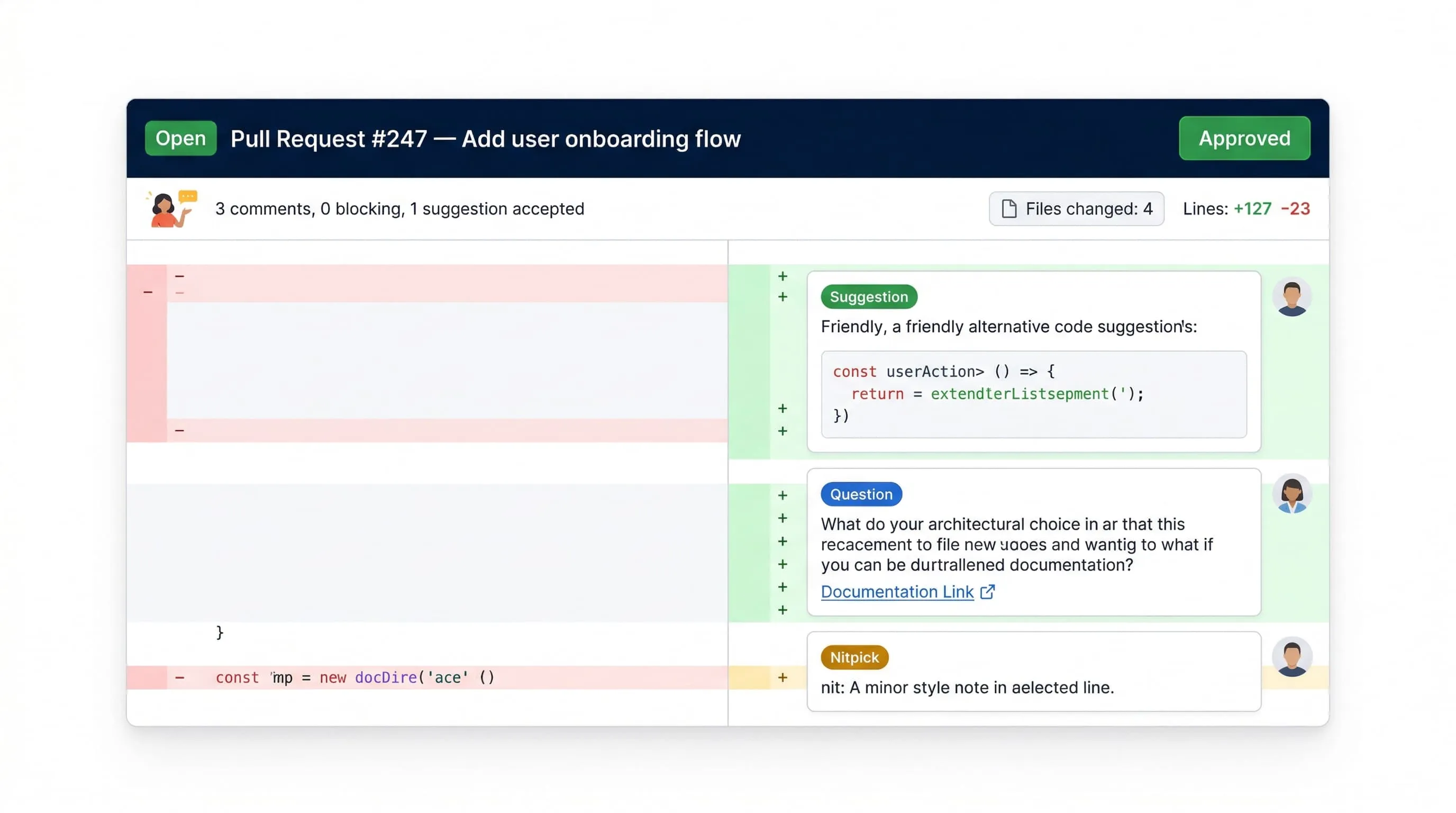
Every pull request gets reviewed by at least one other engineer within 4 hours (business hours). Reviews focus on: correctness (does it do what it should?), maintainability (will someone understand this in 6 months?), and performance (are there obvious inefficiencies?). Comments should be questions or suggestions, not demands. Prefix with 'nit:' for style preferences, 'question:' for understanding, and 'blocker:' for issues that must be fixed.
 Good code review comments are questions and suggestions — not demands
Documentation as a force multiplier
In remote teams, documentation replaces the hallway conversation. Maintain: architecture decision records (ADRs) for why you chose X over Y, a getting-started guide that gets new developers productive in 1 day, API documentation that's auto-generated from code, and runbooks for operational procedures (deployments, incident response, database migrations). If it's not written down, it doesn't exist in a remote team.
Tools that actually matter
Git + GitHub for code and collaboration. Linear for project management (faster than Jira, better than Notion for engineering). Slack for real-time communication (with strict channel discipline). Loom for async video updates. Figma for design collaboration. Tuple or VS Code Live Share for pair programming. Don't add tools to solve people problems — fix the process first.
Measuring output without micromanaging
Measure: PRs merged per sprint (velocity), time from PR open to merge (cycle time), deployment frequency (how often code ships), and sprint commitment accuracy (did we deliver what we planned?). Never measure: hours logged, lines of code, or Slack activity. Trust engineers to manage their time. If output drops, investigate blockers — not attendance. At Fuorix, our remote teams maintain 92% sprint commitment accuracy across all projects. If you need to augment your team with senior remote engineers, contact us to discuss dedicated team arrangements.
Need help with this?
We build the systems described in this article. Let’s talk about your project.
Keep reading
Related articles
BusinessFebruary 18, 2026
How to Hire a Software Development Company in the UAE Without Getting Burned
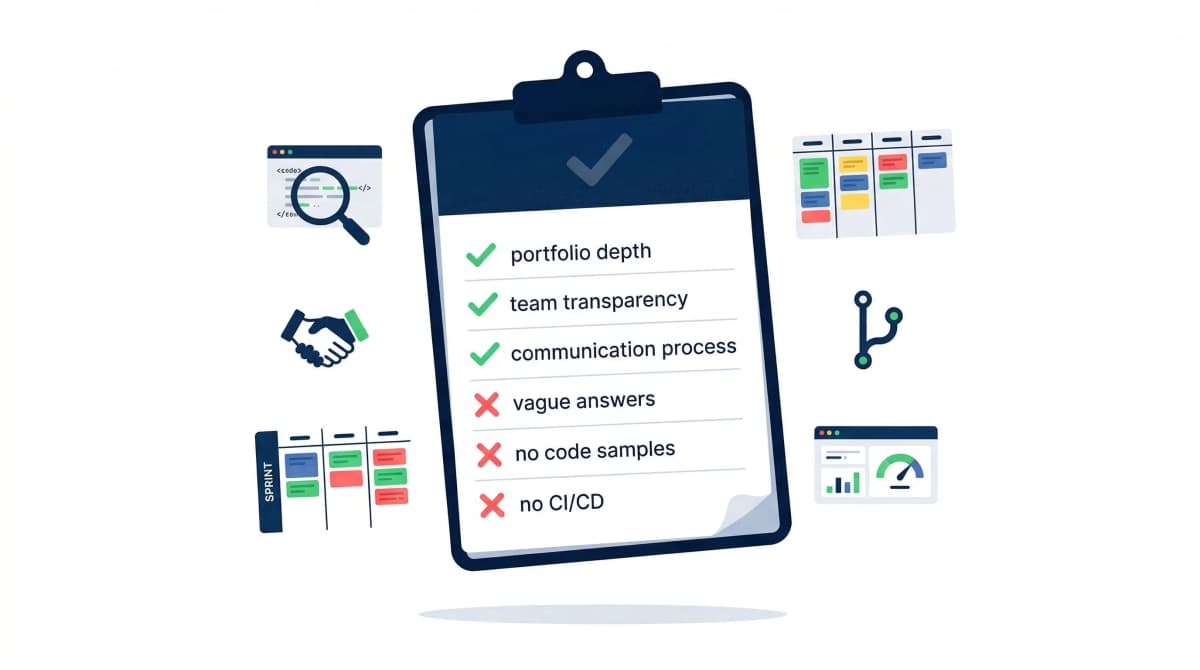
Most bad software projects in the UAE fail at the hiring stage, not the coding stage. The questions to ask, the contract terms that protect you, and the red flags that mean walk away.
2 min read
Read article
StartupsOctober 1, 2025
The Best Tech Stack for Startups in 2026: A Founder's Guide (With a $10k Budget Example)
Founders do not need to pick technologies. They need a stack that is cheap to run, easy to hire for and does not need rebuilding at 10,000 users. Here is ours, and exactly what we would build with a $10k budget.
3 min read
Read article