Startups3 min readBy Fuorix
The Best Tech Stack for Startups in 2026: A Founder's Guide (With a $10k Budget Example)
Founders do not need to pick technologies. They need a stack that is cheap to run, easy to hire for and does not need rebuilding at 10,000 users. Here is ours, and exactly what we would build with a $10k budget.
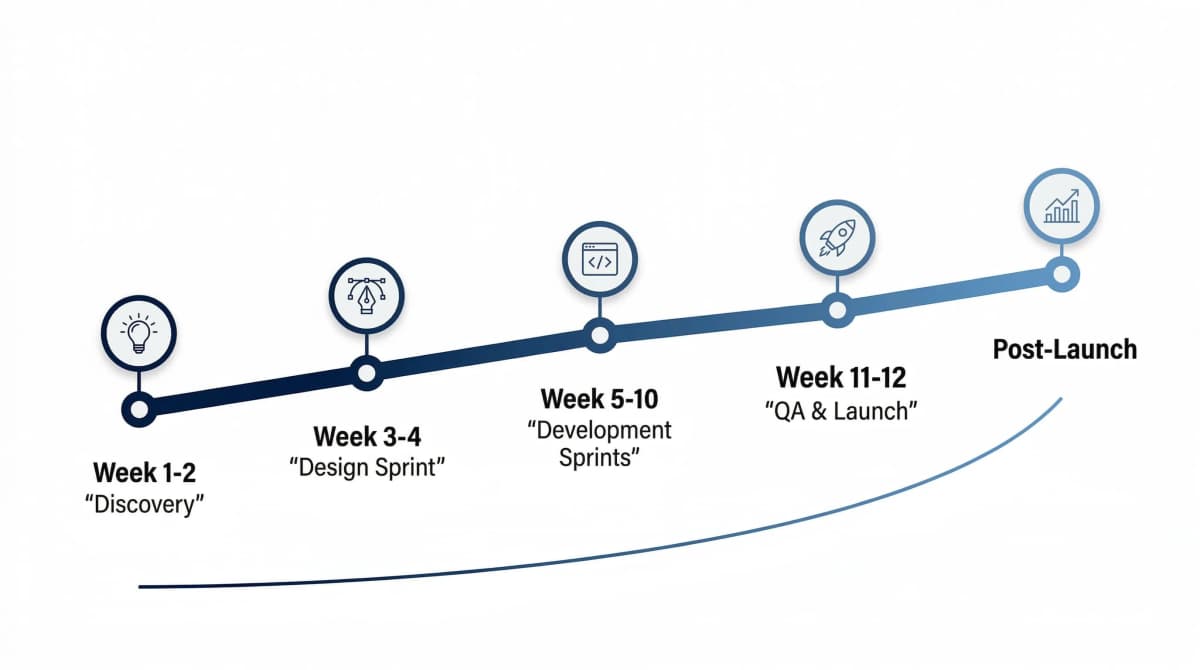
What we would build with a $10,000 budget. A founder came to us with $10k, an idea for a B2B booking tool, and a deadline of three months. This is how we would spend it, and it is the same shape for most SaaS ideas:
- $1,500: discovery, wireframes and a clickable prototype to validate with ten customers before building.
- $6,000: a Next.js web app with logins, one core workflow, Stripe subscriptions and an admin panel, on PostgreSQL.
- $1,000: a simple marketing site with a waitlist, analytics and email capture.
- $1,500: reserve for the changes you will inevitably want after the first real users.
Running cost after launch: roughly $30 to $80 a month on managed hosting until you have meaningful traffic. No mobile app in version one; a responsive web app covers it and saves $5,000.
That is a live product with paying customers for $10k. What follows is why we choose each part of the stack.
The stack that 80% of funded startups should use
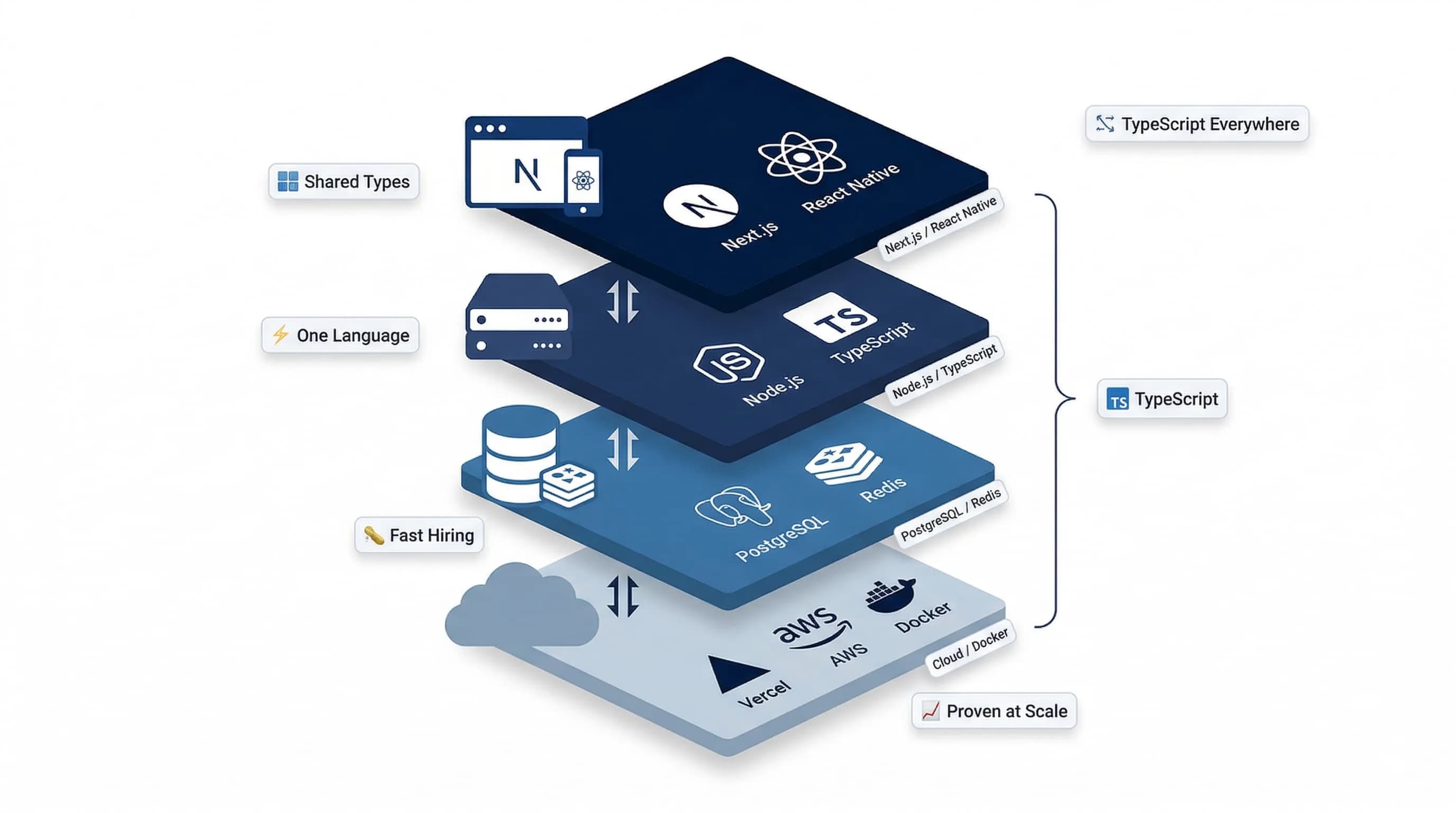
After building 50+ products, we've converged on a default stack that balances speed, scalability, and hiring: Next.js for the frontend (React-based, SEO-friendly, server-rendered), Node.js with TypeScript for the backend (same language as frontend, massive ecosystem), PostgreSQL for the database (battle-tested, scales to millions of rows, free), and AWS or Vercel for hosting. This isn't the only valid stack — but it's the one with the lowest risk of making a costly mistake.
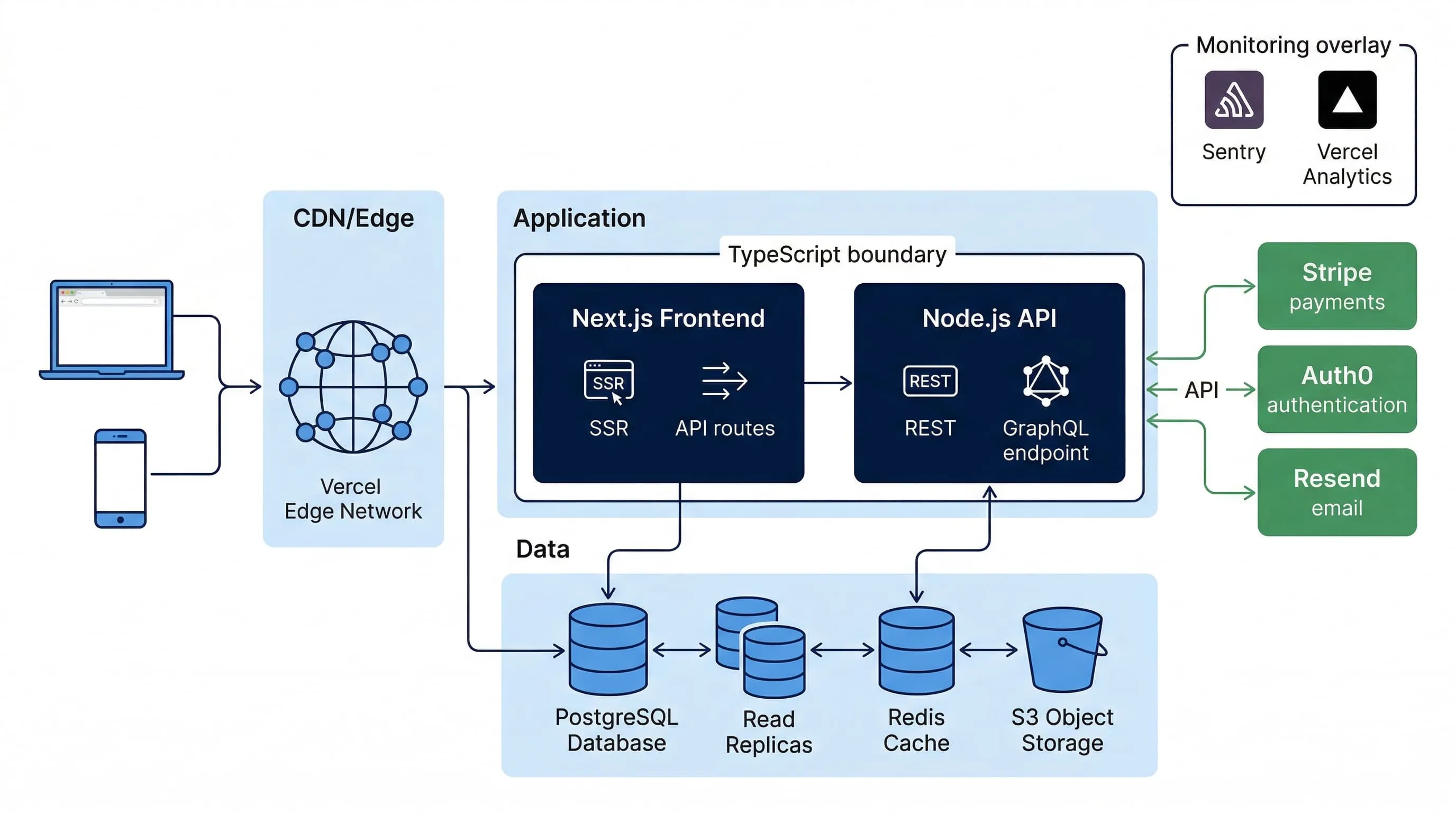 The lowest-risk stack for startups: Next.js + Node.js + PostgreSQL + AWS
Why TypeScript everywhere matters
Using TypeScript across frontend and backend eliminates an entire class of bugs (type mismatches between API response and UI), enables code sharing (validation logic, data models, utility functions), and means you hire from one talent pool instead of two. A full-stack TypeScript developer can own a feature from database schema to UI component — reducing communication overhead and shipping speed.
Database: start with PostgreSQL, always
PostgreSQL handles relational data, JSON documents, full-text search, and geospatial queries in a single database. You don't need MongoDB for flexible schemas (use JSONB columns). You don't need Elasticsearch for search (use pg_trgm and tsvector). You don't need Redis for simple caching (use materialized views). Start with one database and add specialized tools only when PostgreSQL measurably can't handle the workload.
Authentication: buy, don't build
Building authentication from scratch takes 2-4 weeks and introduces security vulnerabilities that take years to discover. Use Auth0, Clerk, or NextAuth.js. They handle email/password, social login, MFA, session management, and security updates for $0-$50/month at startup scale. The engineering time saved is worth $10,000-20,000 in the first year alone.
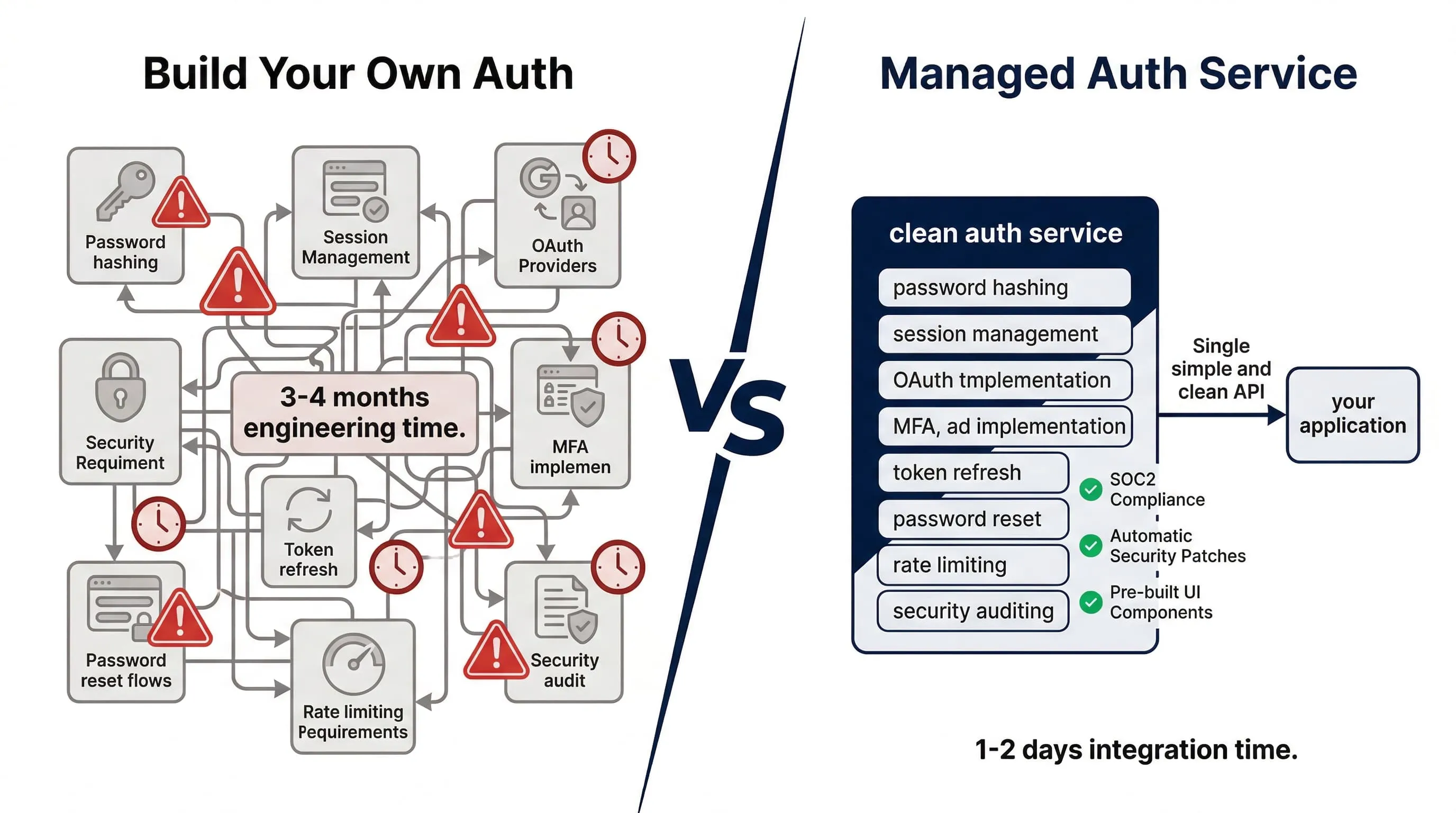 Building auth from scratch costs $10-20K in the first year — and introduces security risk
The 3 technologies to avoid as a startup
- Microservices before you have product-market fit — monoliths are faster to build, debug, and deploy; split into services only when a specific module needs independent scaling. 2) Kubernetes before you have 10 services — ECS Fargate or even a single EC2 instance is fine for most startups. 3) GraphQL before you have 3+ client platforms consuming your API — REST is simpler, better tooled, and sufficient for web + mobile.
When to re-evaluate your stack
Re-evaluate technology choices when: page load times exceed 3 seconds consistently, database queries take over 1 second for common operations, deployment takes longer than 15 minutes, or you can't hire developers who know your stack within 4 weeks. These are signals that your current stack has become a bottleneck. At Fuorix, we help startups choose the right stack from day one — and migrate when the time is right. Contact us for a free tech stack consultation.
Need help with this?
We build the systems described in this article. Let’s talk about your project.